


TBS deep dives into recent developments in solar technology, and the opportunities opened up by new research
Over the past few decades, the energy transition has seen a significant increase in the deployment of solar around the world. Solar photovoltaic (PV) technology has been around for a long time and in turn has undergone a significant amount of development in getting to the efficiency it has today.
Prospective clients often come to us with some existing solar on their roofs that is 10-15 years old and ask us whether it should be replaced. Or alternatively, they sometimes wonder whether they should hold off installing solar in case today’s technology becomes obsolete.
To help you answer those questions, we’ve written this guide looking at recent developments in solar and where we see the most opportunities for improvement going forward.
What solar technology is used today?
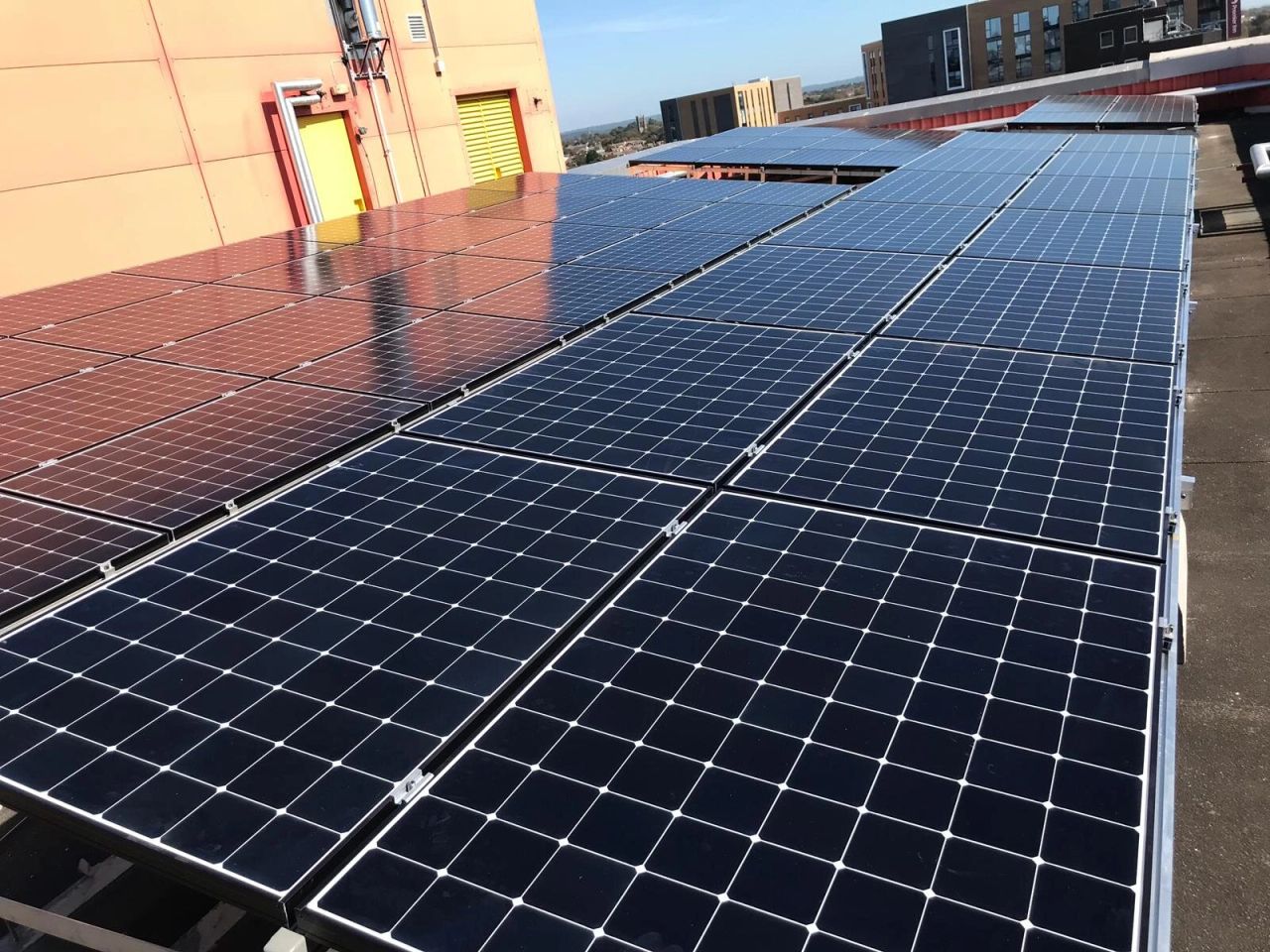
A solar PV system is made of solar cells that absorb the energy from the sun and convert it into electricity. Today, approximately 97.5% of solar cells are based on crystalline silicon wafers, with mono-facial modules (made of monocrystalline or polycrystalline PV cells) being the most prevalent. These are single-junction cells consisting of one layer of semiconductor material – a material that can conduct electricity and control its flow. These cells currently achieve a ‘maximum conversion efficiency’ of about 23%. In other words, only 23% of the solar energy received on the solar panel is converted into electricity by the cells. This maximum efficiency level has improved from around 18% about 10 years ago and is projected to improve gradually over the next 10 years, potentially reaching 25% to 30%.
To find out more about solar terminology, take a look at Two Blues’ solar glossary.
How has solar technology improved over the last 20 years?
Over the past 20 years, research has demonstrated that certain solar technologies have made substantial progress, putting them on the path to exceed the theoretical maximum efficiency a single-junction solar cell can achieve under standard conditions – which is approximatively 33.5%. The National Renewable Energy Laboratory (NREL) – the main national US laboratory from the energy department – has developed an interactive chart to follow the best research cells efficiency, enabling us to see the evolution of solar technologies over the years.
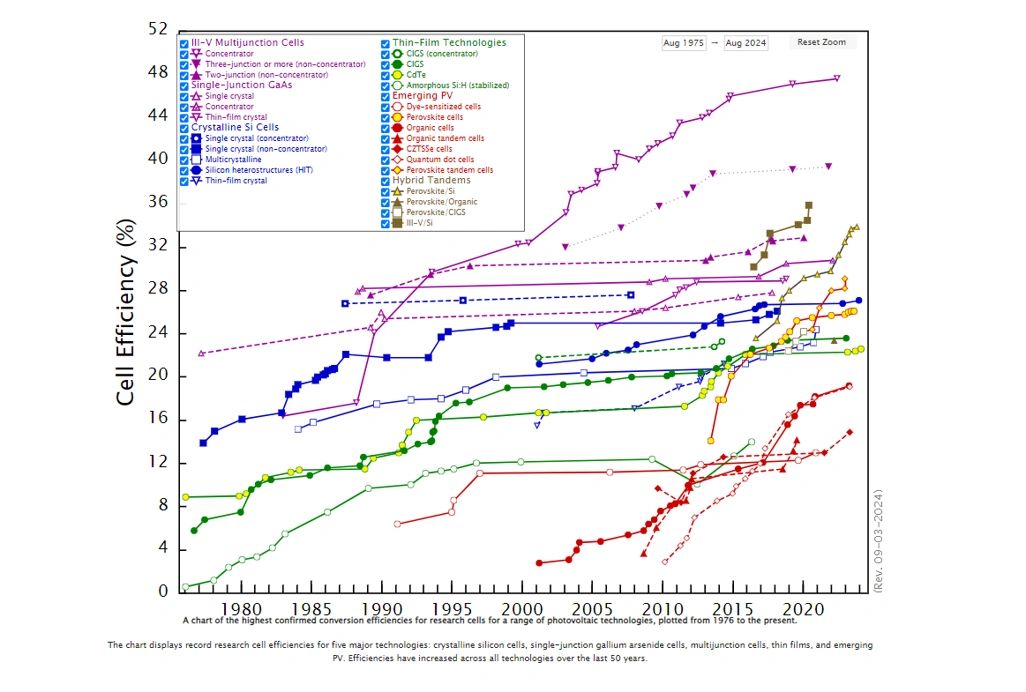
The most commonly used cells today (shown in blue in the above chart) are only improving in efficiency very gradually. Thin film technologies (shown in green) are also used in specific use cases for commercial projects but their efficiency is lower.
Emerging technologies such as perovskite cells (brown) have shown rapid increases in efficiency but are not yet widely available in commercial applications and have not yet reached the efficiency levels of crystalline silicon cells. They hold the promise of being a low cost technology with greater ease of manufacturing in the future. However, several challenges must be addressed before perovskite and perovskite tandem cells can be commercially viable, including issues related to stability and durability under various conditions, as well as maintaining power conversion efficiency at different scales.
The most efficient currently are multi-junction cells (purple). The multi-junction consists of at least two layers of semiconductors, absorbing different wavelengths of incoming sunlight – different parts of the sunlight. Their efficiency generally increases with the number of layers as they catch a broader range of wavelength, making them more efficient than single-junction cells. Since the early 2000s, the efficiency of multi-junction cells has significantly improved. In 2024, they have achieved efficiencies of up to 47%.
This technology is primarily used in space applications due to the high cost of materials (around 200 times more expensive), which currently makes it unviable for everyday applications.
How is research improving the conditions for solar?
While the research above relates to improving solar cell efficiency, some technologies aim instead to increase the effectiveness of solar PV technology by optimising the position of cells and limiting the environmental factors affecting them.
In the last decade, the installation of bifacial solar PV has drastically increased panels’ ability to capture solar irradiance. These panels can increase efficiency compared to monofacial modules by generating electricity from both the front and rear sides – capturing the reflected light from the ground – which makes them particularly effective on flat roofs, ground mount systems and carports. However, sufficient tilt is needed to maximise their benefits which are on average a 10-20% uplift in the power generated vs monofacial panels.
Even though this technology currently costs more than traditional monofacial modules, it is becoming increasingly competitive in the market. In its annual report on Renewable Power Generation costs 2022, the International Renewable Energy Agency (IRENA) explained that bifacial module were about 20% more expensive than “mainstream” technologies. However, the costs of bifacial modules is continuing to fall and the cost gap is likely to get smaller.
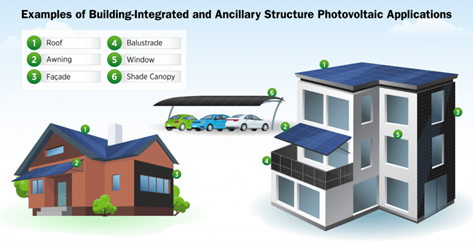
Another expanding technology is building-integrated photovoltaics (BIPV). This system aims to reduce emissions while enhancing aesthetics by integrating solar panels directly into building materials, such as roofs, walls and windows. However, researchers are still working to improve the efficiency of BIPV systems to make them more competitive in the market, though there is a significant use for these in cases where roof repairs are already required on a building.
The effectiveness of solar photovoltaic (PV) systems can be significantly influenced by weather conditions, including dust accumulation and temperature. Researchers are developing technologies to mitigate these issues, such as mechanical cleaning systems and cooling methods. For example, a vibration-based cleaning system has been developed to reduce dust accumulation on solar panels. This system, which is attached to the back of the panel, uses vibrations to dislodge dust without the need for water, offering a potentially efficient alternative to traditional cleaning methods particularly in areas with water scarcity.
How is energy storage improving?
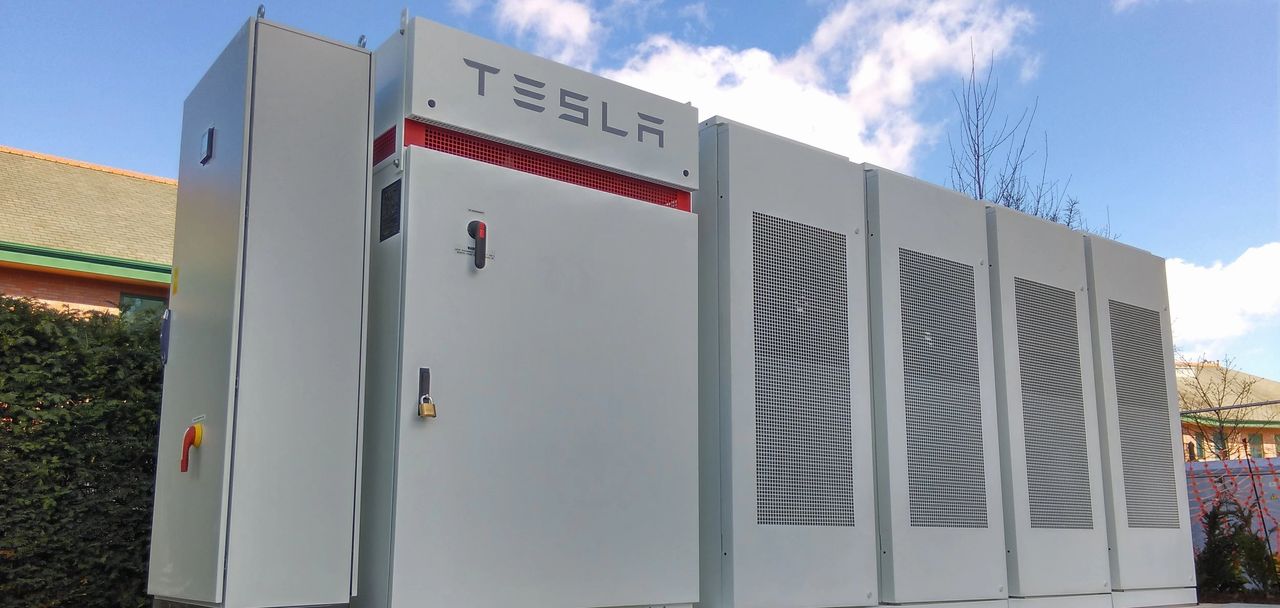
As solar power is an intermittent energy source (it does not provide energy at night or in certain weather conditions), energy storage is a significant opportunity. So far, the most common technology is lithium batteries for short term storage – for example, storing excess generated during the day for use at night rather than simply losing it or exporting it to the grid. You can find out more about the best use cases for combining solar & batteries in our upcoming webinar.
However, some current research focuses on the development of long-term storage solutions. Hydrogen is one of the most popular so far and works by converting the excess of electricity into hydrogen via a process called electrolysis. Recently, German company Home Power Solutions (HPS) released the first solar-hydrogen system for the home. However, these kinds of technology are far from being commercialised at a large scale as the hydrogen needs to be stored either as a liquid – below -252.9 C – or as a gas compressed at very high pressure. A significant amount of electricity is also required to create the hydrogen.
Another upcoming storage technology is solid-state batteries which are composed of a solid electrolyte instead of the liquid one found in classical batteries. The key benefits are: the potential for higher storage capabilities, faster charging times, longer lifespan and lower risk (due to the reduced flammability of the solid electrolyte). However, as with many upcoming technologies, the high cost of materials and production along with various other complexities in the manufacturing process, means that commercialisation at scale is still many years away. Nevertheless, in October 2023, Toyota and Idemitsu Kosan announced a partnership to develop solid-state batteries for EVs. The companies aim to establish a robust supply chain and mass produce commercial solid-state EV batteries as early as 2027.
As you can see, research into solar and its associated technologies continues apace and we will see ongoing improvements in efficiency and cost.
Does this mean it would be better to wait?
To put all of this in perspective, let’s assume you’re looking to install a system of 300 kWp on your roof. If you install it now, you may get around 240,000 kWh of energy from it each year (depending on where you’re located in the UK) whereas in the future, you could get c. 30% more – ie: 310,000 kWh.
Let’s assume you install the system now – here’s what the commercials might look like:
- Installation cost: c. £225,000
- Energy Savings: assuming you use about 80% of the energy and your energy tariff is about 22 p/kWh you could save c. £40,000/year. (in reality your energy price is likely to keep increasing and you would save more)
- Approximate total savings by 2044 (ignoring cost of capital): £575K
Now instead, let’s see what the commercials would look like if you wait 10 years and then install it:
- Installation cost: assume a 30% fall to £157,500
- Energy Savings: assuming you use about 75% of the higher energy output and your energy tariff is still about 22 p/kWh, you could save c. £51,150/year.
- Approximate total savings by 2044 (ignoring cost of capital): £354K
This is obviously a very simplified calculation and in reality you would need to factor in the cost of capital, maintenance costs, probable rising energy costs and potentially changing levels of energy use.
However, even this simplified version shows that whilst cost and efficiency continue to improve, these changes are likely to be incremental and it will rarely be commercially beneficial to delay your investment. Not to mention that there are many funding methods available which mean you can benefit from solar & battery technology without any capital outlay at all.
To find out more, check out our website or tune into our next webinar.