


We take a closer look at when to install roof-integrated solar, and other alternatives available for sustainability-conscious businesses

Roof-integrated solar has opened up opportunities for businesses to wrap solar installation into their roof repair projects. In the first of Two Blues’ Solar Tech Spotlight series, we take a look at its best use cases, and key things to keep in mind regarding its installation.
What is Roof-Integrated Solar?
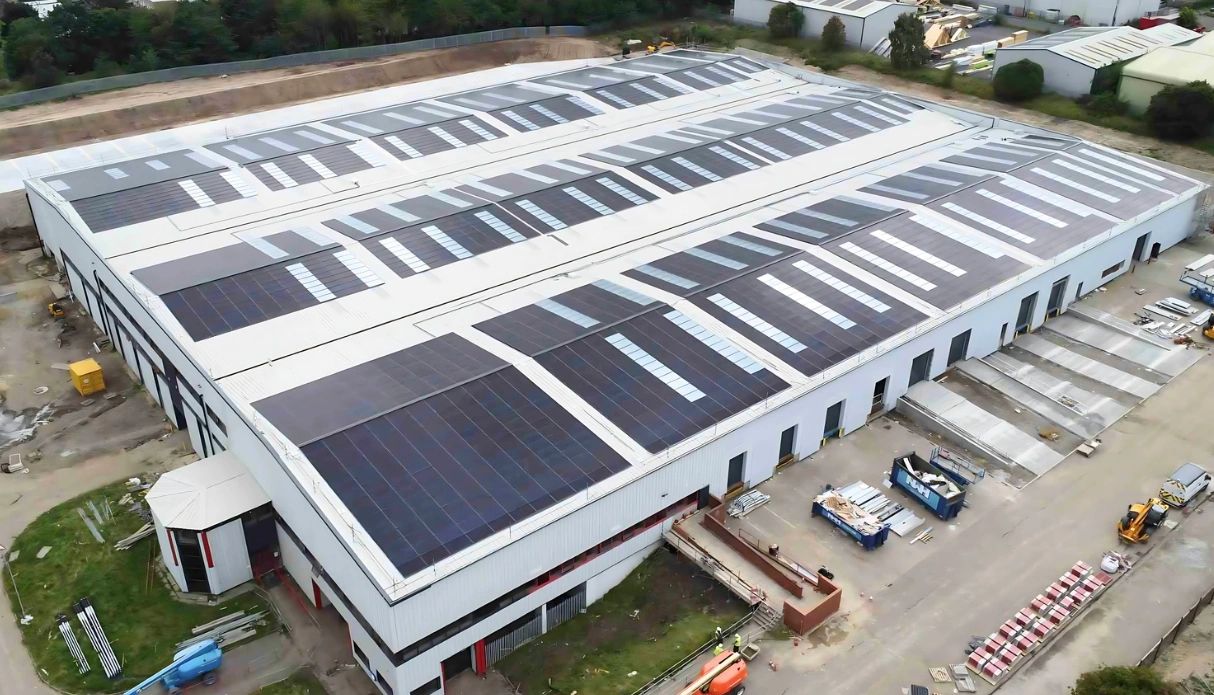
To install integrated solar, a section of the roof is removed to expose the underlying structure. Trays are then attached to this structure, a waterproof membrane is fitted, and the solar panels are installed on top. The area around the panels is filled with the aim of creating a seamless finish.
Roof-integrated solar is typically used by businesses aiming to adopt solar energy while addressing roofing needs simultaneously. Unlike traditional solar panels which are typically mounted on top of a roof, roof-integrated solar panels become part of the roof structure itself, enabling it to act both as a generator of power and as a roofing solution.
When is it Best Used?
Roof-integrated solar is most suitable for new builds, major renovations, or when a roof replacement is already being planned by a business. Traditional solar installations are often delayed by the need for roof re-sheeting or repair, but roof-integrated solar can streamline the process by addressing both needs at once.
This integration can result in significant cost savings by eliminating the need to handle roofing and solar as separate projects, saving on both attendance, material and scaffolding costs. It is of course not always the most economical option for a business, and so it is typically best utilised when a full roof repair is becoming essential for a business and solar installation is a priority.
In cases where only light-touch roof works or limited over-cladding are required for solar, it can be cheaper to install solar as a ‘separate’ bolt-on project while scaffolding is still standing from these remedial works.
How Long Has It Been Around?
While solar technology has been in use for decades, roof-integrated solar has gained traction over the past 10 to 15 years.
Advances in materials and design have made these systems more reliable and versatile. Many systems now come with warranties comparable to standard roofing projects, providing peace of mind similar to traditional roof replacements.
What Companies Are Providing It?
Not all solar EPCs and installers are willing or qualified to implement roof-integrated solar, so it is worth asking your contractor for their thoughts on the benefits of installing roof-integrated PV and whether they offer it as part of their solution. It’s important to also request relevant case studies and a prior track record to make sure previous installations have run smoothly. It may be worthwhile to speak with manufacturers of roof-integrated PV, such as Solfit or Viridian Solar, some of whom offer installation services as well.
One of the benefits of working with Two Blues is that we will assess these options for you, and speak frequently with installers and manufacturers around the country. We can then advise on whether roof-integrated solar is the right solution for your business.
How Expensive Is It?
Roof-integrated solar requires a higher initial investment than traditional solar panels due to its dual functionality. However, by combining roofing and solar generation into one solution, businesses can avoid separate costs for each, and it is typically cheaper than the alternative – a reroofing project followed by solar installation.
Additionally, the potential energy savings achieved through solar can help offset the capital costs in the long-term, helping to justify the capital allocation.
Potential Benefits
- Cost Efficiency: By incorporating solar panels directly into the roofing structure, businesses can save on both roofing materials and installation costs.
- Energy Savings: Generate renewable energy on-site, reducing electricity bills.
- Lettability: Properties with solar installations can see an increase in market value and attractiveness to new tenants on account of their green credentials and reduced energy costs.
- Sustainability: This solution can combine a necessary reroofing project with the ability to meet your business’ carbon reduction goals onsite.
Potential Drawbacks
- Higher Upfront Costs: The initial investment for roof-integrated solar can be significant, so it is worth making sure that a roof replacement is necessary, and that solar cannot be installed elsewhere onsite, or with lighter-touch roof works.
- Maintenance Complexity: Roof-integrated systems may require both roofing and solar expertise for maintenance and repairs. Ensuring that both aspects are serviced correctly is crucial to long-term performance.
- Better for New Constructions: These systems are ideal for new builds or significant renovations and can be more complex for retrofit installations, limiting their applicability in certain scenarios. It can sometimes be cheaper to traditionally overclad certain areas of the roof, for example, instead of opting for roof-integrated solar.
- Warranty and performance: Though not always the case, we have seen the performance warranties of roof-integrated solar be shorter than typical solar installations. The efficiency is typically c. 5% lower as well.
Does Two Blues Fund Roof-integrated solar?
Yes – at Two Blues, we see roof-integrated solar as a useful solution for solar projects to move forward that would otherwise be delayed by expensive roof repairs.
While we can also fund separate roof repair projects as part of a solar installation, we’ll typically weigh up the potential benefits of roof-integrated solar as a solution for your business, and advise on the most effective solution. We view roof-integrated solar as a solution that will grow in popularity as businesses become more comfortable with its longevity and improved performance in the market, but not one which is essential in every case where roof repair is required for solar.