


We take a look at the climatic conditions affecting solar in the UK, and how UK businesses can still benefit from solar installation
Despite growing pressures to reduce operating carbon emissions, many companies are still unsure whether installing solar in the UK is worth its while, given our well-earned reputation for grey skies and light drizzle.
We therefore thought we’d put together some key information to understand how well solar operates in the UK, focusing particularly on how different climactic conditions influence solar performance. This article covers this and more, including how much your business could reduce its CO2 emissions throughout a typical year, and how much could be saved in energy costs through a Power Purchase Agreement (PPA).
How do different environmental conditions impact solar panels’ effectiveness?
It’s worth first understanding how environmental conditions affect a solar PV system’s effectiveness. To illustrate this, we have analysed UK climate and solar irradiance, using Met Office data, for a typical and optimally tiled solar system in order to assess results. These conditions impact the amount of solar radiation received by a solar PV system, thereby influencing the quantity of electricity generated.
1) Angle of sunlight
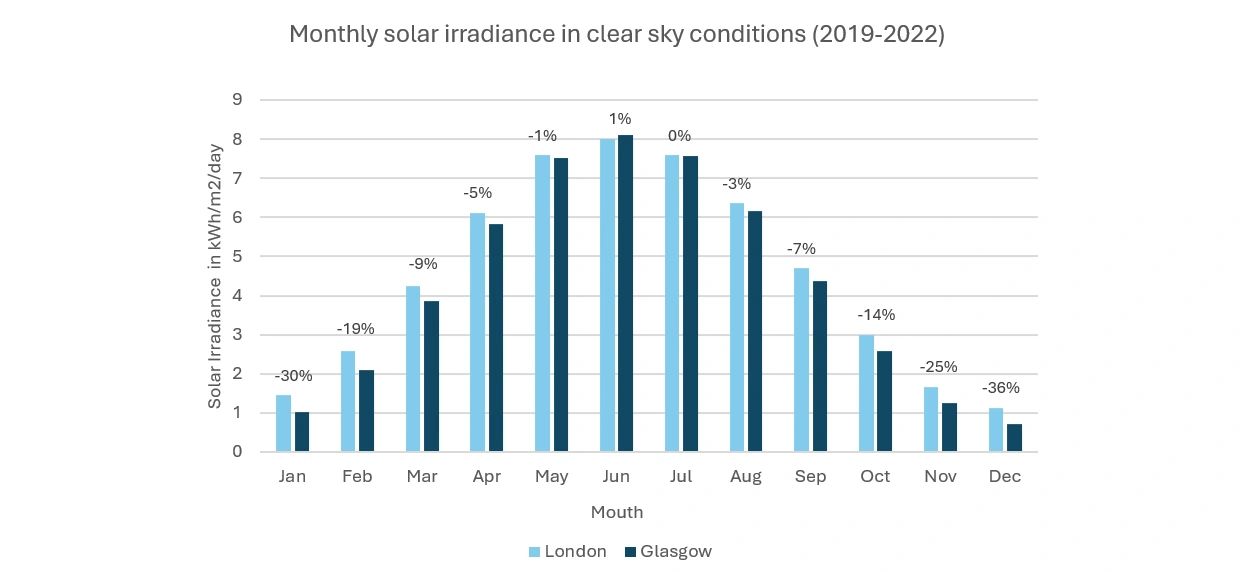
During summer in the Northern Hemisphere, the angle of incoming sunlight is more direct than in winter, and as a result, solar irradiation is greater.
Whereas in summer the difference in solar irradiance in London vs Glasgow is fairly insignificant, these differences are more stark in winter, as the graph below shows. So naturally, the further north you are based, the less irradiance you will experience in winter.
2) Length of days
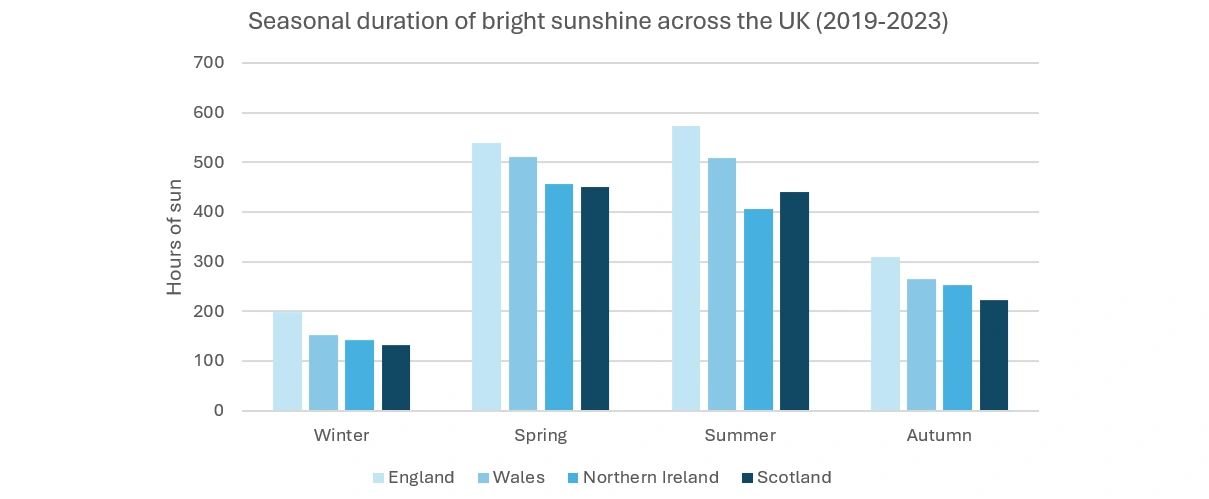
The amount of sunlight absorbed by solar PV also depends on the daily duration of sunshine. In the UK, during spring and summer, the recorded hours of bright sunshine are roughly twice as long as those in winter:
3) Temperature
Solar PV efficiency is not significantly affected by cold temperatures but does decrease slightly as temperatures rise, particularly above 25C. It is estimated that every degree increased above 25C results in a 0.5% decrease in solar PV efficiency, which can be a problem in summer in many locations. Fortunately, even in the sunniest areas of the UK temperatures do not often exceed 25C. Ironically, therefore, the UK’s lower average temperatures are actually beneficial for the efficiency of solar panels (even if the accompanying lack of sunlight is not).

4) Cloud cover and atmospheric conditions
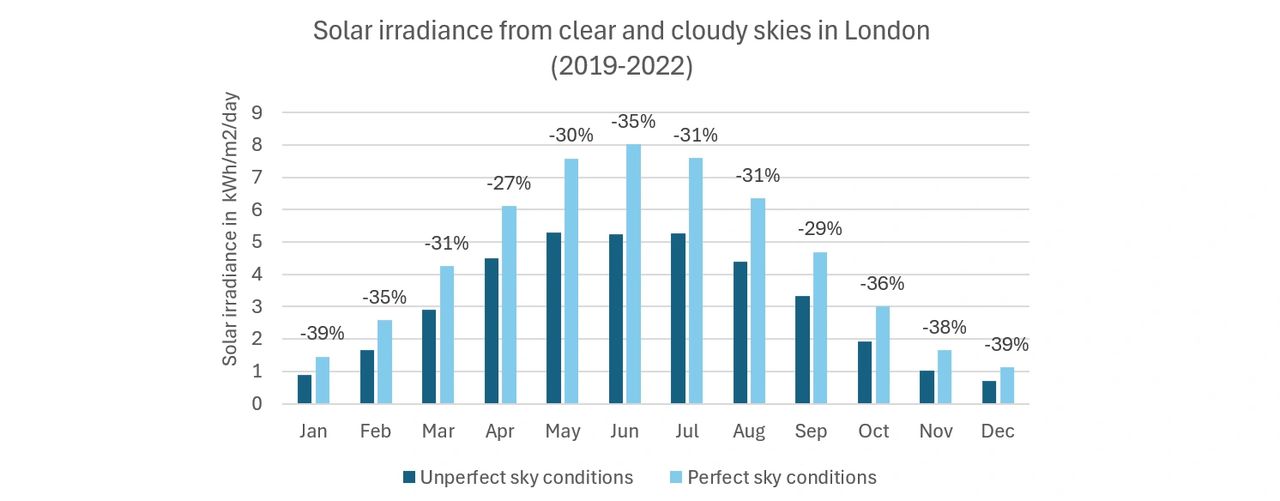
Many people assume that cloud cover negates the benefits of solar, but this is only partly true. Cloud cover and atmospheric particles absorb, reflect, and scatter sunlight. Increased cloud cover reduces the amount of solar irradiance reaching solar PV panels, thereby decreasing their effectiveness.
Despite this drop in solar radiation on cloudy days, it is still worth implementing solar PV with the knowledge that you will still get a portion of its benefits, particularly in summer.
5) Dust
Dust levels are an important consideration for solar at some sites such as those near beaches or quarries. The significance of dust deposits varies throughout the year depending on wind direction and speed.
Dust deposits can obstruct solar PV panels from efficiently converting sunlight into electricity by changing their optical properties. This alteration results in more light being absorbed and reflected by the module itself, while less light is transmitted through the surface to the solar cells. Additionally, dust accumulation can raise the temperature of the solar modules, which may further decrease their efficiency.
6) Rainfall and Humidity
The UK has a high relative humidity climate, which, due to the higher concentration of particles in the air, can reduce the amount of direct sunlight by increasing both reflected and refracted radiation in the atmosphere. Additionally, condensation can accumulate as a thin layer on the surface of solar PV panels, forming a barrier that obstructs the transmission of solar radiation.
High humidity levels can also contribute to corrosion on the metallic components of solar PV systems, diminishing their performance. That said, this corrosion risk can be drastically reduced for your business with regular and effective maintenance.
Rainfall, meanwhile, has a mixed effect on solar – while the accompanying clouds impact solar irradiance, the rain itself helps to clean the solar panels from obstacles like dust and cool down the system.
So which region gets the best conditions in the UK?
When all the above conditions are accounted for, southern areas of the UK understandably experience greater benefits of solar installation. The southeast of the UK typically receives the best conditions for solar PV in terms of solar irradiance, temperature, cloud cover, and humidity throughout the year.
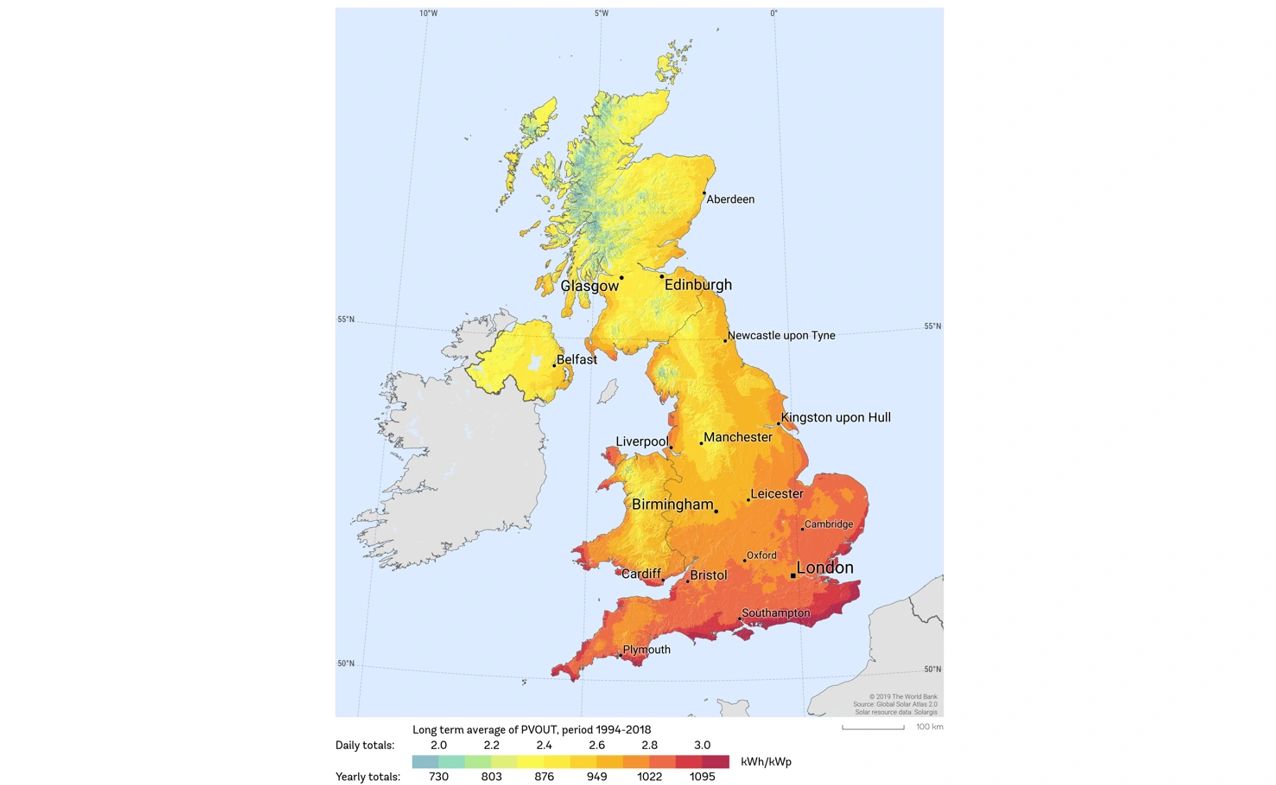
Data based on the World Bank group and Solar GIS: https://solargis.com/maps-and-gis-data/download/united-kingdom
Yet despite these variations in irradiance levels, it is not a case of abandoning solar in Scotland and northern parts of the UK, as there are still significant benefits to be had. The UK as a whole experiences a sufficient level of irradiance to make solar a viable option for businesses looking to reduce CO2 emissions and energy bills, as well as opening up opportunities for REGO certifications.
How much could my business reduce CO2 emissions throughout the year?
By using solar PV directly onsite, CO2 emissions are reduced in two main ways:
- By decreasing the reliance on electricity produced from fossil fuels (scope 2 emissions)
- By avoiding the emissions associated with the distribution and transmission of electricity through the grid (scope 3 emissions).
The amount of CO2 saved through solar varies from business to business because of environmental factors, roof size, orientation and tilt, and energy consumption patterns.
For a medium/large solar system near Bolton (c. 1 MWp), the annual electricity generation from solar can save about 165t of CO2 emissions. This is the equivalent of taking approximatively 66,000 Eurostar trips from London to Paris – so there is still a large impact that can be made.
Can I save on energy bills with a solar PPA?
A lot of the time, the most significant obstacle to installing a solar PV system is the high cost of investment required. However, by opting for a PPA, businesses can save money buying electricity at lower than market rates while enjoying the sustainability benefits of solar.
The graph below shows a TBS pricing proposal for a medium sized rooftop solar system based in Huddersfield, Yorkshire. Despite the slightly unfavourable irradiance conditions referenced in this article, this manufacturing business will still benefit from a significantly lower energy price tha its market rate, as well as the energy security of a fixed price for 25 years.
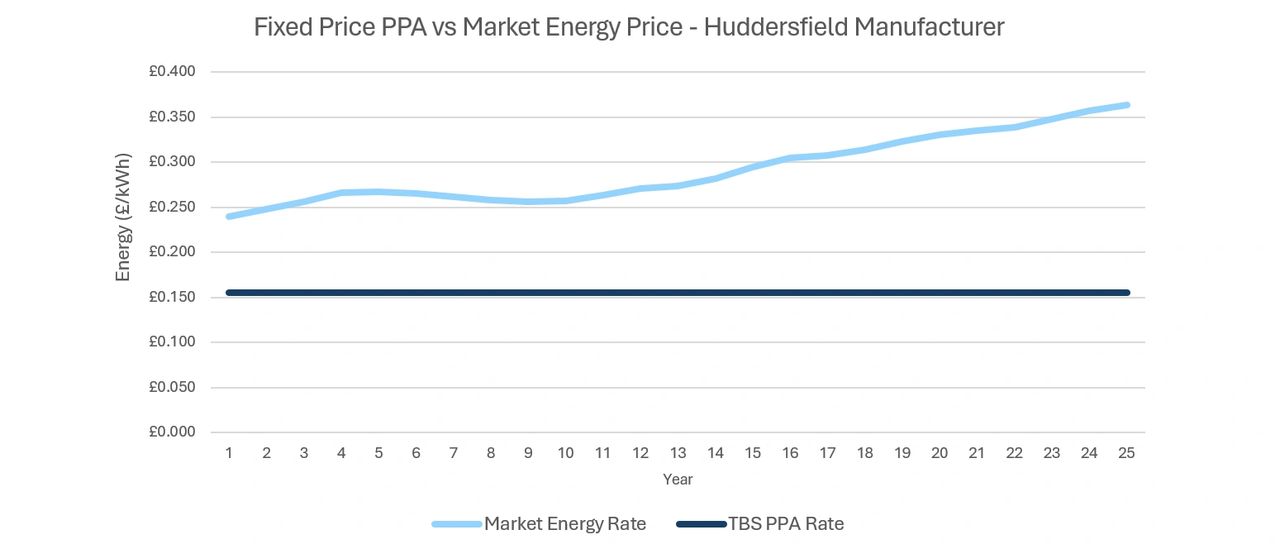
The benefits of solar are therefore not restricted solely to sun-washed parts of the world. Though the cloudier conditions and fewer sunlight hours of the UK make it a worse spot for solar than southern Europe, this does not negate its potential benefits for UK businesses.
Both the potential carbon savings and energy price savings of solar make it a worthwhile focus for UK businesses suffering from volatile energy rates and market pressures around ESG.