


We explore the implications of carbon labelling and Scope 3 emissions on supply chain sustainability, and how solar PPAs can help.

It is well known that many businesses are facing growing regulatory and consumer pressure around their carbon emissions, with implications from regulators, customers and investors for those that fail to act.
These emissions are typically classified into 3 Scopes:
- Scope 1 relates to direct CO2 emissions owned or controlled by the business on site (including heating, fuels used by company vehicles etc.).
- Scope 2 includes indirect CO2 emissions caused by energy purchased and consumed by a company (including electricity generation from the grid).
- Scope 3 embraces indirect CO2 emissions from up and down the business value chain.
Whilst most companies are making good progress in quantifying and addressing their Scope 1 and 2 emissions, many businesses find Scope 3 emissions significantly more complex. Take a supermarket, for instance: most of their carbon emissions (about 90%) stem from the embedded emissions of the products they sell, rather than the direct emissions from stocking and operating their stores. At Two Blues, we feel strongly about supporting businesses to take a holistic view of sustainability, ensuring their entire supply chain can be decarbonised and significant gains made in their Scope 3 journeys.
A key driver for Scope 3 in the retail sector is consumer behaviour. Several studies have already shown that when environmental impact labels are present, consumers are more likely to choose products with a lower environmental impact. For example, a 2021 study on the impact of environmental sustainability labels on ‘willingness-to-pay’ for foods found that ecolabels can influence consumer preferences and purchasing, especially for meat and dairy products.
Consequently, increasing numbers of customers are now on the lookout for information pertaining to a product’s embedded carbon emissions.

How can the environmental footprint of a product be recognised?
Various organisations have been collaborating to develop a standardised framework to quantify input emissions and broader environmental impacts, such as biodiversity loss, and water management. This framework aims to provide a credible and trustworthy method for avoiding greenwashed marketing claims, categorising products based on their embedded environmental score.
For instance, the European Commission has been actively working on the Product Environment Footprint (PEF) methodology, aiming to integrate environmental, social, and economic considerations from a systemic perspective. The operational implementation of this concept is through Life Cycle Assessment (LCA). LCA focuses on the entire life cycle: from raw materials extraction, through manufacturing and distribution, to waste management. It also employs a multi-criteria analysis that extends beyond carbon footprint and can be adapted to local and global scales.
This methodology, along with others, has been utilised to create eco-labels that assist consumers in selecting the most environmentally friendly products. While some labels simply indicate if a product is recognised as better for the environment, such as EU Ecolabels, others attempt to categorise them. For instance, The French Environment and Energy Management Agency (ADEME) is currently developing an eco-score focused on food and textiles based on the LCA approach. This indicator categorises products into five groups (A to E), indicating their environmental impact from the lowest to the highest. Various stakeholders, including organisations like Yuka, have conducted experiments to refine and implement this eco-labelling system.
What is the status of eco-labelling on products in the UK?
In the UK and worldwide, numerous eco-labels have emerged over the past decades. While some eco-labels have a broad focus on various environmental impacts, others specifically target carbon footprint reduction.
For instance, the Carbon Trust has begun implementing product carbon footprint labelling, aiming to foster informed decision-making by consumers and facilitate value chain decarbonisation. These labels primarily rely on life-cycle assessments of product carbon footprints, which can be categorised as either cradle-to-gate (from raw material extraction to the factory gate) for business-to-business applications or cradle-to-grave (from raw material extraction through manufacturing to waste management) for business-to-consumer purposes.
The demand for these labels is increasing. Indeed, as consumer environmental awareness grows, behaviour is shifting towards purchasing more environmentally certified products. This is a trend that is gaining force, encouraging retailers to prioritise producers that can obtain carbon labels to satisfy consumer preferences. Obtaining these labels therefore requires retailers to reduce Scope 3 emissions through either prioritising sustainable producers or driving suppliers to start their own carbon reduction initiatives.
How can fully-funded solar help businesses reduce Scope 3 emissions?
In the retail sector, the implication of these sustainability classification systems on suppliers is significant. With a large amount of pressure on suppliers already from raw material price increases, reduced labour force and competition from imports, investing the capital required to modernise and reduce the embedded carbon in products is difficult. This is where we believe fully-funded solar can help. At TBS, we fund 100% of the installation and ongoing maintenance of solar PV systems and provide the power to businesses at significantly lower-than-market rates through a Power Purchase Agreement (PPA).
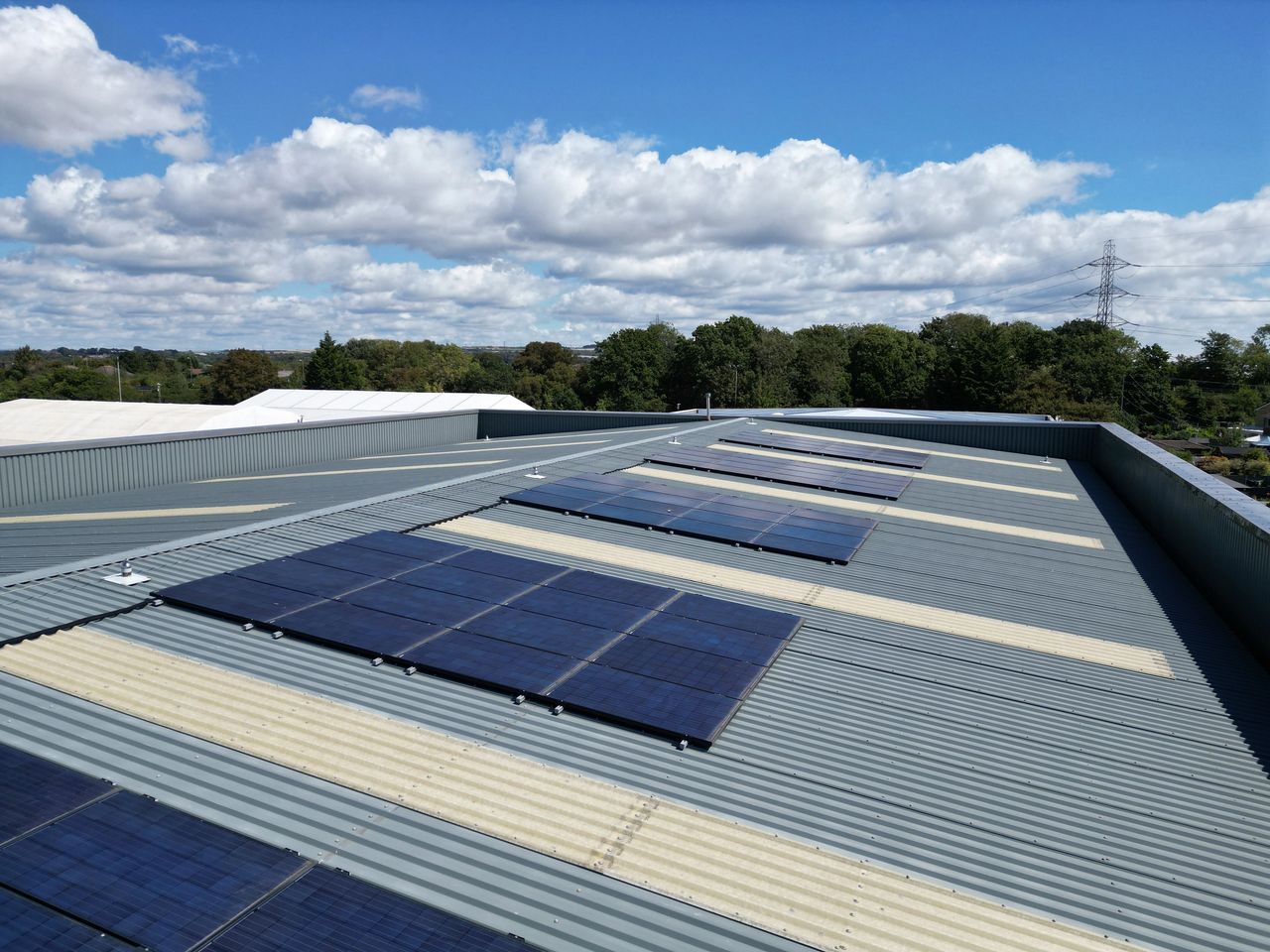
A key aspect of TBS’ relationships with clients is expanding its offering beyond their frontline stores to the rest of their supply chain. From a retailer’s perspective, the benefits are multiple. Firstly, by installing solar PV on their own roof, they’ll reduce their Scope 2 emissions by using renewable energy to power their buildings. Additionally, by encouraging their suppliers and manufacturers to install solar on their buildings they’ll drastically reduce their Scope 3 emissions. The products they sell are subsequently more likely to receive low carbon labels, enhancing their attractiveness to environmentally conscious consumers.
Fully-funded solar can therefore be a key facet of retailers Scope 3 reduction strategy, enabling carbon reduction beyond their customer-facing stores and throughout their supply chain.