


The Two Blues guide to demystifying solar jargon
Like all industries, there’s plenty of jargon and a plethora of technical terms associated with solar panel systems. At Two Blues Solar, we want to be transparent with our clients and speak in language that makes sense to everyone. However, it’s sometimes hard to avoid the jargon so, if we must use it, we’ll always explain what it means.
As a starting point, we’ve compiled a list of some of the words you might find when exploring commercial solar solutions.
Solar Energy Terms ☀️
PV / Photovoltaic: the conversion of light (photo) into electricity (voltaic).
Kilowatt (kW): a unit of measurement for electrical power (equal to 1,000 watts).
Kilowatt-hour (kWh): a measure of energy equal to power consumption of 1,000 watts for one hour. The average large business will consume 100,000 kWh per year. However, an energy intensive site is more likely to use upwards of 750,000 kWh per year.
Megawatt-hour (MWh): 1,000 kWh.
Irradiance: a term used to measure the influx of radiation and light.
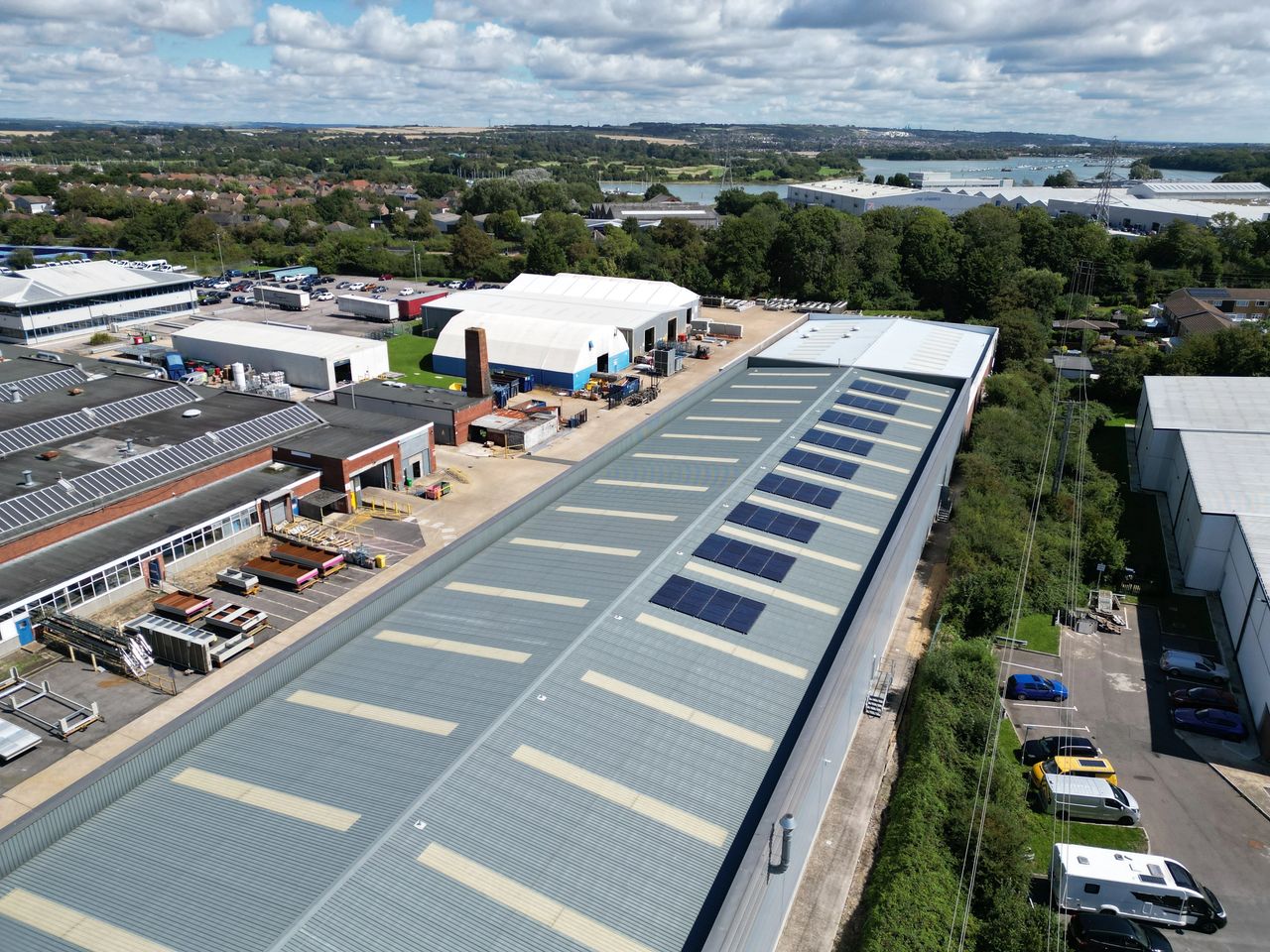
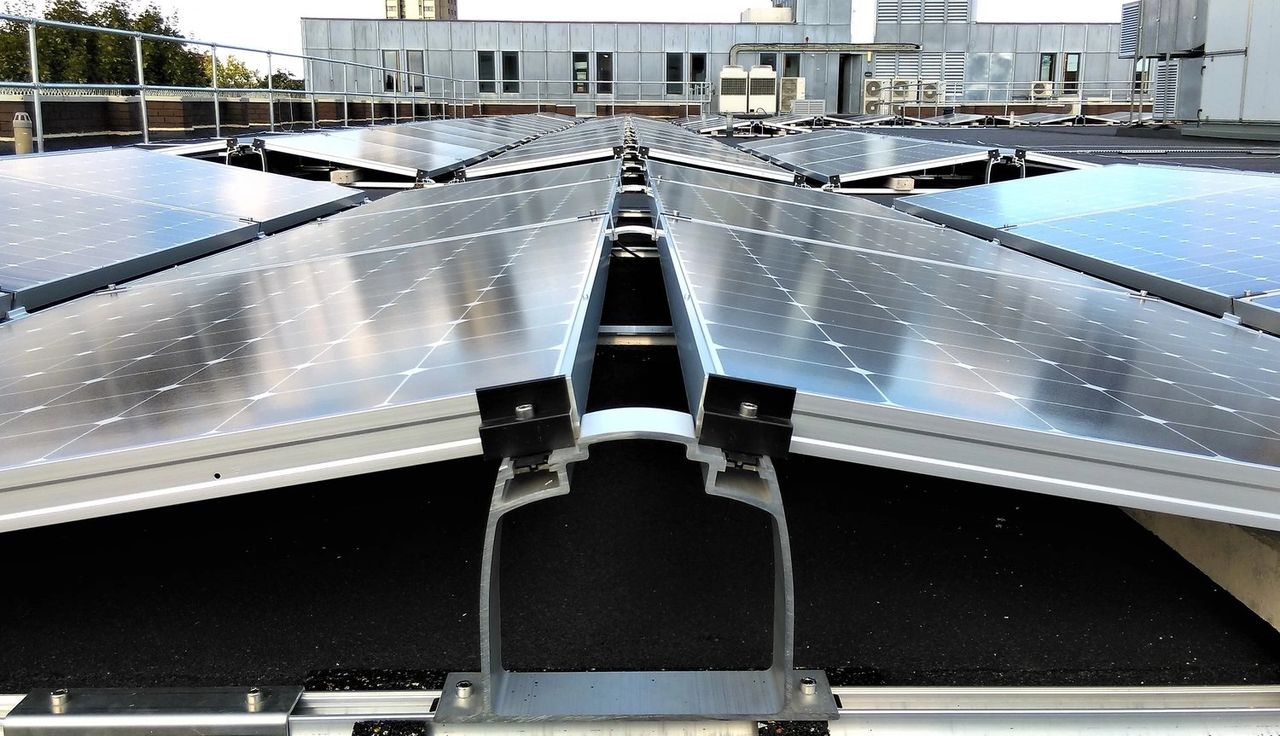
The components of a solar PV system 🧱
Cell: a photovoltaic (PV) cell that converts light into electricity. Multiple solar cells can be connected together electrically to form modules.
Module: a group of PV cells sealed in a protective layer to protect them from the environment.
Panel: this can include one or more modules wired together to create one whole panel. Panels that are used on solar rooftops are typically 1m wide x 2m long meaning they can easily be lifted and moved without specialist equipment. Panels that are used on ground-mounted systems are usually larger. Two Blues Solar only installs panels from manufacturers listed in Bloomberg’s Tier 1 list.
Array: a number of solar panels or modules wired together to generate the desired voltage and power for the site.
Inverter: this is a key component of your solar system. It is essentially a “box” which converts direct current (DC) into alternating current (AC), enabling the electricity generated by the solar panel to be used in sockets / outlets. There are several types of inverter:
- String inverter: the most common type of inverter. In this set-up, the solar panels are wired together through a common “string” and all of the energy produced is sent to a single inverter. String-based systems are easy to maintain and cheaper than other types but have the disadvantage that the system is only as good as the worst performing panel. However, if you are regularly monitoring your system’s output, this may not cause any problems. If your site however is affected by shade, a micro inverter or power optimiser is preferable as it optimises the system’s performance and ensures that one panel’s underperformance does not affect a whole string of panels.
- Micro-inverter: a micro-inverter system has one inverter per panel which enables each panel to operate independently. Micro inverters typically have a longer lifespan than string inverters and can provide greater flexibility if you want to increase your system size at a later date. Whilst micro-inverters may therefore seem preferable, they are however more expensive to install, create more points of failure and require more maintenance. It is often sufficient instead to have a sophisticated monitoring system which alerts you to problems in real-time so any under-performance can be rectified quickly.
Power optimisers: – these are similar to microinverters and more commonly used in commercial installations. An optimiser is attached to each panel and manages the current and voltage to ensure that each panel is providing its maximum power output. This ensures that where individual panels are shaded or performing sub-optimally, the do not impact the output of the whole system and instead just the output of the individual panel they are attached to. They are more expensive than string inverters and do not provide the same flexibility as micro inverters to increase system size at a later date. However, they enable monitoring at an individual panel level.
Mounting system: this consists of the frame, brackets, hooks etc required to hold the panels in place. There are numerous solutions available depending on the nature and positioning of the solar array and the roof structure and pitch. As an example, a flat roof uses a ballast system which doesn’t penetrate the membrane of the roof and enables the best angled positioning. Prior to installation, your installer will conduct a structural roof survey to determine the best system and fixings.
Solar tracker: only suitable for ground-mounted systems, a solar tracker is a mounting system that automatically tilts to follow the path of the sun throughout the day. A tracking array will produce more energy through the course of the day than a “fixed array”, particularly during Summer months.
Solar panel equipment warranty: a solar panel’s product warranty covers the integrity of the panel itself and protects against problems such as manufacturing defects and premature wear and tear. The terms and conditions can vary but most Tier 1 manufacturer’s panels are now sold with a 25 year warranty.
Solar panel performance warranty: the amount of electricity a solar panel produces declines a very small % (c. 0.4%) every year, known as degradation. A performance warranty is the manufacturer’s guarantee that the panels will not lose more than the designated % of power output capacity over time.
PV monitoring: a solar energy monitoring system offers information about the performance of the PV system, such as how much energy is produced, consumed and fed into the grid. At Two Blues Solar, we use silicon irradiance sensors to measure the irradiance on the panels and determine how much energy should be produced. We then compare this with real-time performance data from the system so that we can quickly identify under-performance.
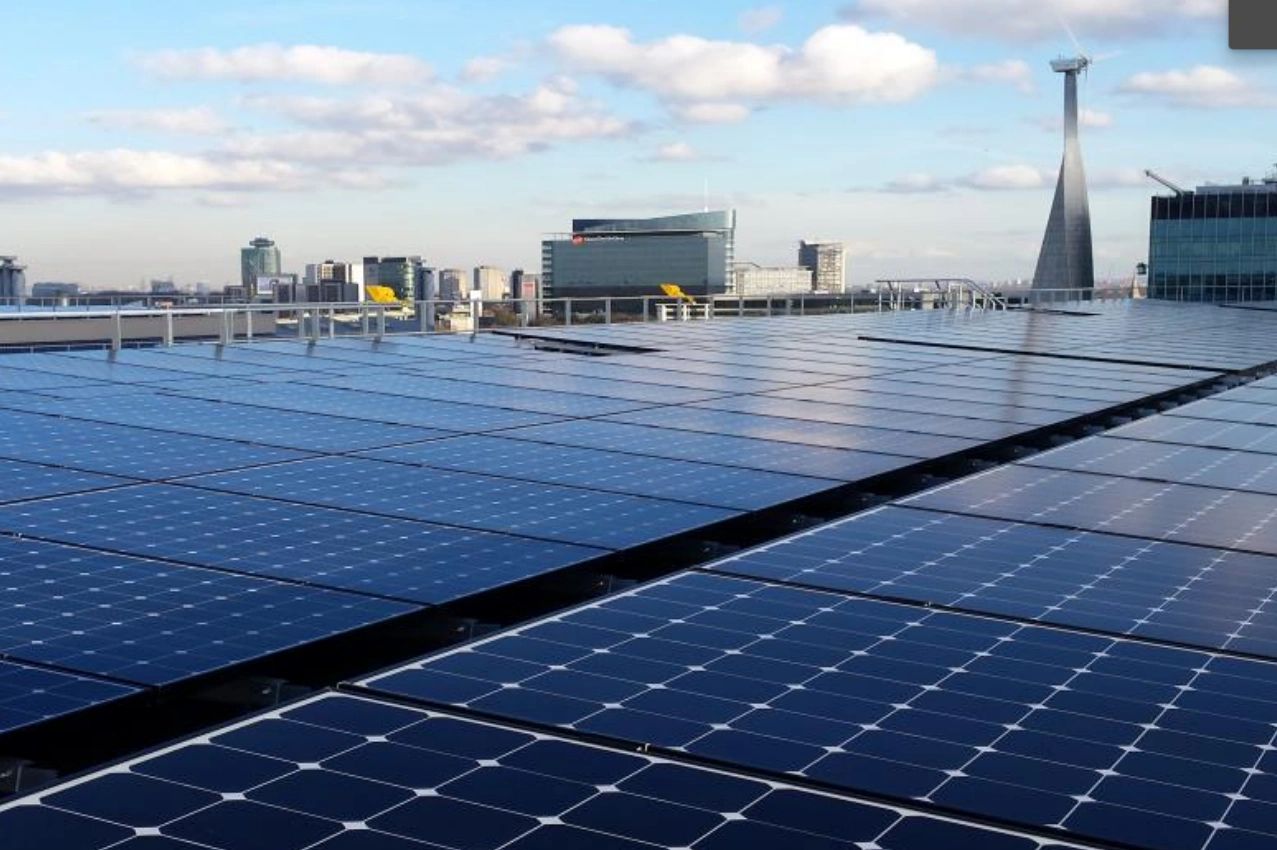
Solar system size measurements 📏
Wp (watts peak): This refers to the peak power of a panel and is measured under what’s known as “Standard Test Conditions” which are similar to a bright sunny day. It is a way of measuring the highest output you’ll see from the panel and allows different panels to be compared.
kWp (kilowatts peak): This is a standard measure used to demonstrate the size of a solar array (ie: the Wp of each panel multiplied by the number of panels). 1kWp = 1,000Wp. The term kWp represents the theoretical peak output of a system, so over one hour of time in perfect test conditions, a 100kWp solar system would generate 100kWh of solar energy in one hour. However, in real world conditions, a system will never reach its peak all of the time as the output of each panel varies constantly depending on the weather and position of the system. Therefore, the actual annual output of a system (measured in kwh) will be a percentage of its peak output; this represents its yield and will differ from one location and system design to the next. Commercial arrays average between 20kWp and 500kWp and industrial rooftop arrays can be 1,000kWp (1MWp) or more. Your solar installer or financier will advise you on the optimal system size for your energy consumption requirements.
Solar Materials 🪟
Monocrystalline: a kind of photovoltaic cell made from a slice of single-crystal silicon, where the entire cell is oriented in one direction.
Polycrystalline (also referred to as multicrystalline): a photovoltaic material made up of silicon offcuts, creating tiny individual crystals which are oriented in various directions. They are cheaper and slightly less efficient than monocrystalline.
Amorphous (aka thin film solar): a thin-film photovoltaic cell made from non-crystalline silicon that has a more glassy structure. They are physically larger than crystalline panels of the same wattage and perform better under low light conditions or in hot temperatures. However, in other conditions, crystalline are typically more efficient.
Who’s who in the solar supply chain 👷
There are a number of different players involved in the solar supply chain. Solar Energy UK have a useful directory which allows you to identify members from each step of the process.
Energy/sustainability consultants: provide support in developing a sustainability strategy.
Installers: provide solar installation services for residential or commercial customers.
EPC providers: a provider of end-to-end solar services including engineering, procurement and construction.
Inverter manufacturers: there are about 10 manufacturers that make up the majority of the market.
Panel manufacturers: Bloomberg has compiled a list of Tier 1 manufacturers.
PPA provider: provides finance to cover the capital outlay and ongoing maintenance costs of a solar system. Find out more.
Operations and maintenance provider: companies responsible for ongoing reactive and preventative maintenance of your solar system. This may include repairs, cleaning, parts replacement etc.
Other Useful Terms 📖
Power Purchase Agreement (PPA): if you’d rather preserve your capital for core business activities rather than self-fund your solar installation, you can agree a PPA with a funder instead. The funder will finance 100% of the costs of your solar installation and then sell you the power you consume via the PPA.
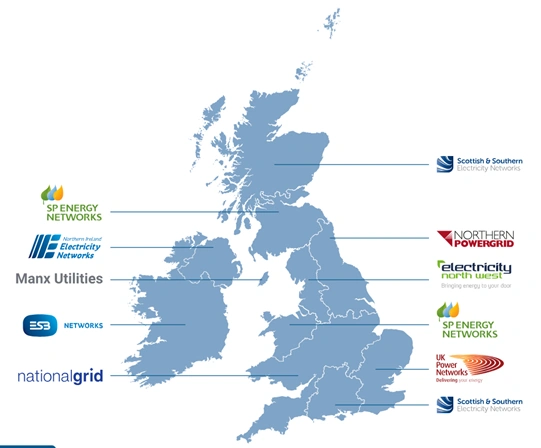
Distribution Network Operator (DNO): the DNO owns and operates the network of cables, transformers and towers that bring electricity from the national transmission network to businesses and homes. You can find out your local DNO on the Electricity Network Association’s website. Your solar system will need consent from your local DNO via a G99 Application. It typically takes around 3 months to get a response to an application. More details about the timescales involved in installing solar can be found here.
Behind-the-meter (BTM): a BTM system provides power that can be used on-site without passing through a meter. Rooftop solar is therefore a BTM system. It is typically much quicker to achieve planning consents and to install a BTM system than a “front-of-meter” system.
Additionality: refers to new renewable generation, i.e. additional capacity. Many organisations use REGOs to purchase 100% of their energy from renewable supply. However, this does not provide additionality to the market and can potentially lead to accusations of ‘greenwashing’. On-site solar however does provide additionality and support the UK’s drive to net zero.
Export: any energy that is generated by your on-site renewable source but not used may be able to be exported and sold to the grid. The export price is typically a lot lower than the price an end user would pay for energy.
Think we’ve missed anything, or want to find out more about any of the concepts in this article? Feel free to drop us a line here!