


TBS takes a look at what businesses can expect from their energy prices in 2024
After an extremely turbulent couple of years, recent news around energy prices certainly looks more encouraging.
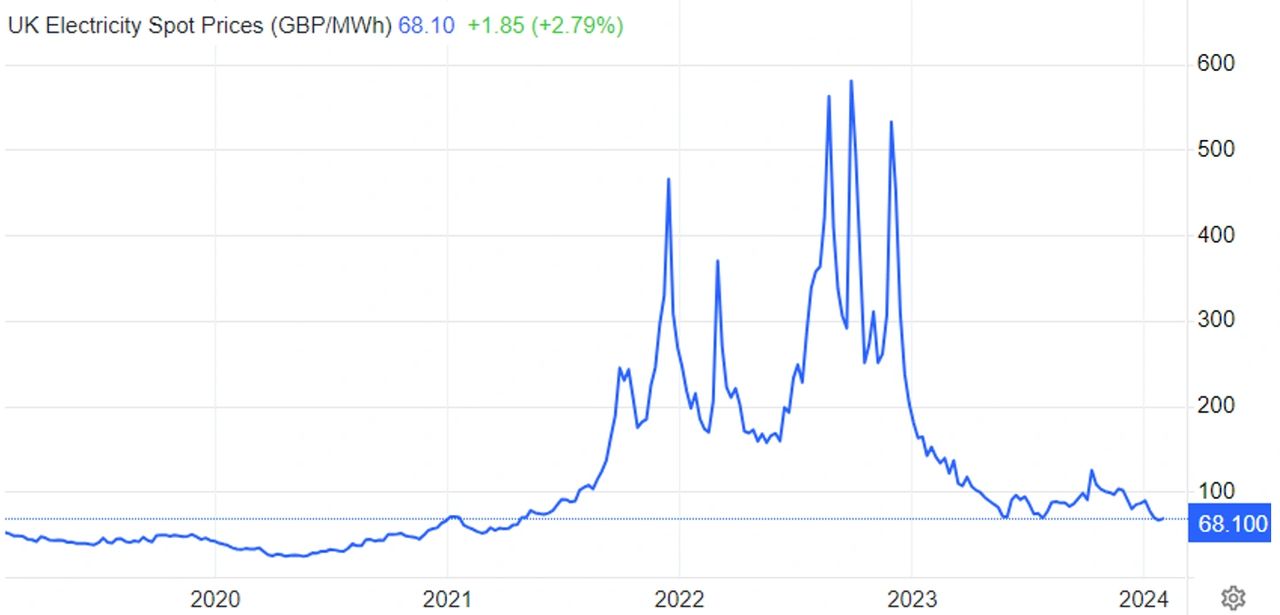
Wholesale energy prices have fallen from the record highs of 22/23 as a result of good energy storage levels, better supply availability and improved weather conditions for renewable energy.
What caused the record highs?
In the first instance, prices started to rise following Covid due to an opening up of markets and resurgence in demand. This was then exacerbated by the Russia/Ukraine war which, along with an attack on the Nord Stream gas pipelines, caused significant disruption to supply.
In addition to these global and geopolitical factors, the UK has also experienced some of its own challenges in the past few years which have heightened the impact on the market – for example, outages at several nuclear power stations which led to higher gas usage as well as the collapse of various UK energy suppliers in 2021.
How are gas and electricity prices linked?
A lot of the issues above relate to gas prices, so it’s important to understand how gas and electricity prices are linked.
Around 40% of electricity is sold on the “spot market” (day ahead or same day auctions). Prices on this market are set using a system called “marginal cost pricing”, whereby units of electricity are sold at the price of the most expensive unit needed to meet demand at a particular moment in time.
Generators bid to provide capacity and it is allocated in “merit order” with the cheapest generators chosen first. However, at most times of day, gas will still be required to meet demand as it still accounts for a final proportion of the UK’s energy generation; gas typically has the highest marginal cost (as it requires fuel to burn) and therefore if gas prices rise, spot market prices also rise.
It’s for this reason that, despite an increasing proportion of the UK’s electricity being generated from cheaper renewable sources, energy prices have not fallen in tandem. The Government is considering reforms to separate the link between electricity and gas prices in its Review of Electricity Market Arranagements (REMA).
Even if you’re on an energy plan with your supplier which delivers 100% renewable energy, the price you pay is not based on the cost of wind or solar generation but on the cost of the last source used to meet demand – typically the cost of gas.
One of the best ways to access the lower cost of renewables is therefore to install on-site renewable generation, which will enable you to benefit from the lower costs.
Why have wholesale prices dropped recently?
Wholesale prices have fallen since the end of 2023. In the first instance, this is due to a relatively mild winter, combined with energy-saving initiatives by consumers and businesses which helped to cut demand.
Secondly, European countries have reduced their reliance on Russian gas by filling storage facilities with liquified natural gas from across the world.
How will this affect my bill now and in the future?
There’s often a lag before falling wholesale energy prices feed through to businesses and consumers. This is because your supplier will be buying a proportion of its energy in advance and will have paid for it when prices were higher.
Suppliers also need to factor in risk, and volatile markets create higher risk which leads to higher end prices.
Finally, it’s very important to note that wholesale energy prices only impact a proportion of your bill (typically c. 40-60%). The remaining cost is comprised of non-commodity costs, comprising network costs, environmental costs and operating costs of suppliers. Therefore, even though wholesale prices have fallen, there will still be many other factors influencing your total bill.
What’s going to happen to wholesale prices?
In the short-term, it’s useful to look at prices in the spot market (where energy is bought and sold on a daily basis to meet demand).
These prices then influence the forward delivery contract rates (where energy is purchased in advance).
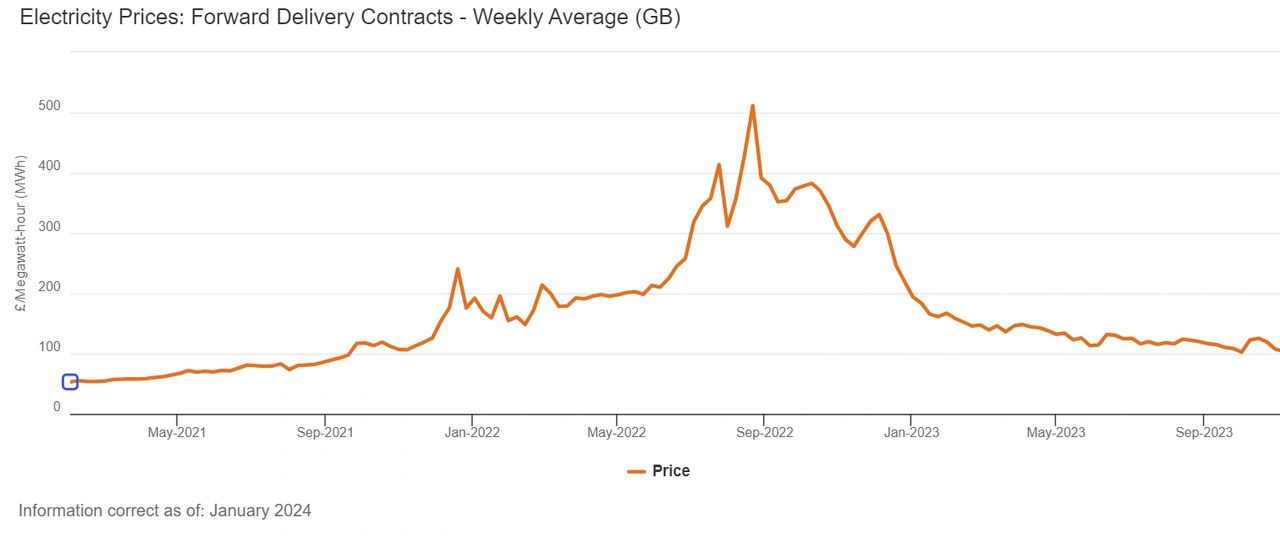
In the medium term, wholesale prices will continue to be affected by gas prices. Increased competition for LNG from Asia may cause upward pressure on prices, while there’s also a risk of price shocks due to disruption in the Red Sea as part of conflict in the Middle East.
So what’s going to happen to non-commodity costs?
As mentioned, these make up around half of your bill (as shown below) so are very important to your overall energy costs.
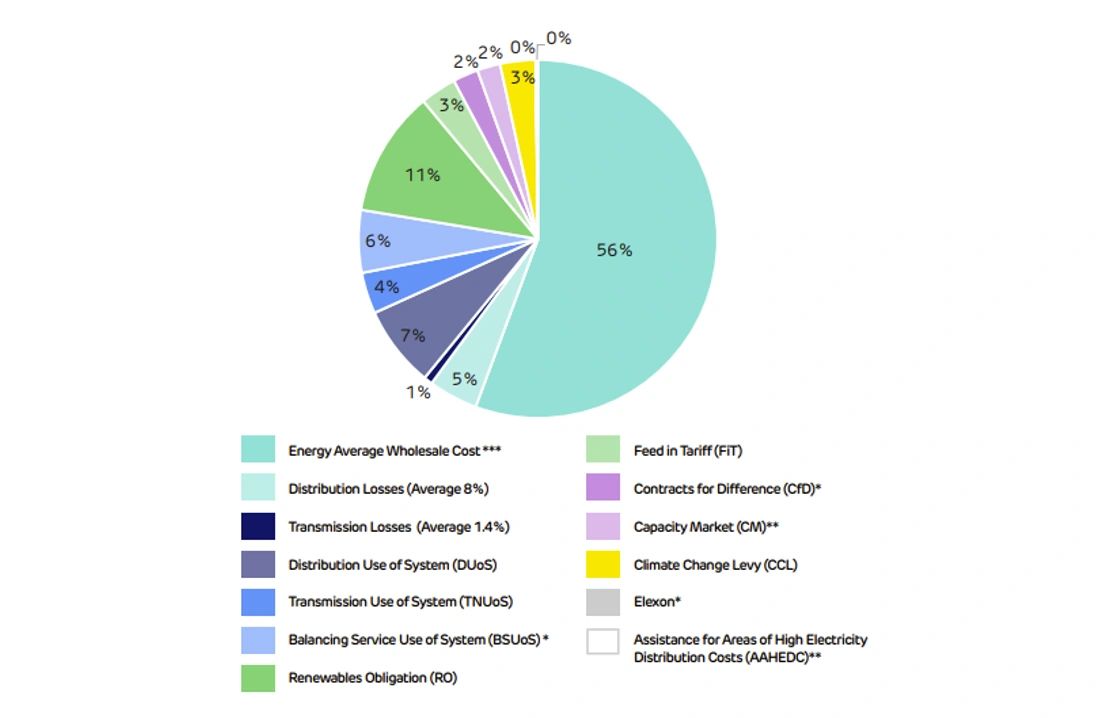
These costs relate predominantly to the costs of maintaining local distribution and national transmission networks, as well as government environmental levies. Given the significant network investment required to reach net zero goals, it’s expected that these costs will only increase in the near future, particularly as some are pegged to inflation rates.
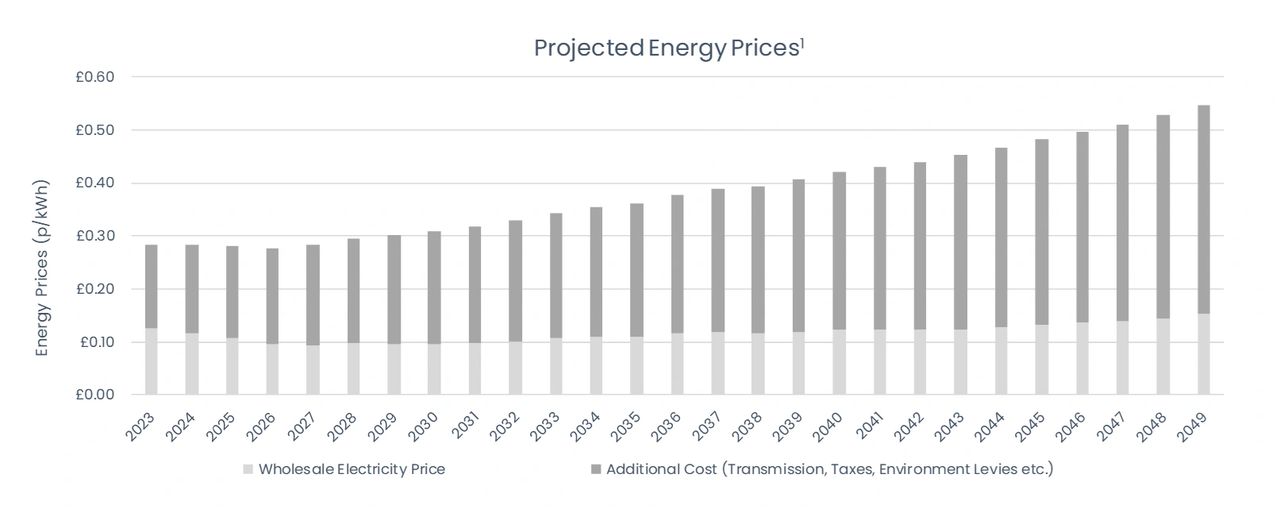
As ever, there’s no simple picture of what will happen to energy prices but hopefully some of the pain of 22/23 is now behind us.
There are various options you can consider to reduce energy price volatility and shocks, including fixed price contracts and on-site generation. If you’re interested in finding out more about on-site solar, including power purchase agreements as a means of financing them, please get in touch with us at info@twobluessolar.com .